10 Best Binoculars of 2026, Ranked for Birding, Hiking and Stargazing
Most people buying a decent pair of binoculars compare magnification and stop there, which is how they end up with a shaky 12x view they can't hold still. After weeks with UK roundups, spec sheets and amazon.co.uk listings, the best binoculars for most walkers and birders are the Nikon Monarch M7 10x42, a roof prism pair with ED glass, a 6.0° field and a lockable dioptre.
A plain note on method: I haven't handled all ten. This is a research-built list, several picks have no reviewer behind them, and I say which ones. If you mainly want to look up at the night sky from the back garden, skip ahead to the Celestron.
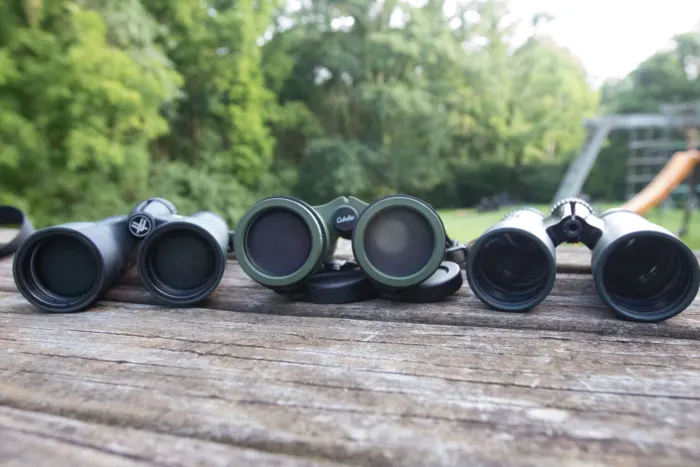

- Bright sharp view: ED glass and dielectric-coated roof prisms give a bright, natural image at dawn.
- Wide field coverage: A listed field of 105m at 1,000m is generous for a 10x pair.
- Comfortable eye relief: Eye relief listed at 16.4mm works for most people who wear glasses.
- Steady handheld viewing: Compact and light for a 10x42, so less arm fatigue on long watches.
- Precise focus control: The lockable dioptre keeps your focus setting put when it rattles in a bag.
- Durable field build: A comfortable, durable body that is water resistant enough for British drizzle.
- Hand shake at 10x: Hand shake shows at ten times magnification, so brace on a wall or post.

- Bright sharp view: APO optics with ED glass aim to cut purple fringing around birds.
- Wide field coverage: The full-size 8x view is easy to scan when finding birds quickly.
- Comfortable eye relief: Eye relief listed at 18mm suits most people who wear glasses.
- Steady handheld viewing: Eight times magnification is easier to hold, with less wobble than 10x pairs.
- Precise focus control: A centre focus wheel with dioptre adjustment that you set up once.
- Durable field build: Listed as waterproof, so it is built for wet days out in the field.
- Narrow dioptre range: Dioptre adjustment is listed at plus or minus two, so check it suits you.

- Bright sharp view: ED glass with dielectric, phase-corrected BaK-4 prisms for a bright, contrasty image.
- Wide field coverage: About 130m at 1,000m listed, wide enough to follow flocks across fields.
- Comfortable eye relief: Eye relief of 17mm plus twist-down eyecups suits glasses wearers well.
- Steady handheld viewing: Eight times magnification keeps the view calm and easy for beginners.
- Precise focus control: Centre focus with a wide dioptre range handles big left-right eye differences.
- Weight unclear: The listing weight figures disagree, so assume a full-size 8x42 in the hand.

- Bright sharp view: Porro II prisms and field flattener lenses keep the edges flat and sharp.
- Wide field coverage: A listed field of 105m at 1,000m is usable width for a compact 10x.
- Comfortable eye relief: Eye relief of 14.5mm with large rubber eyecups, fine without glasses.
- Steady handheld viewing: The optical image stabiliser counters hand shake for steady 10x at a button press.
- Precise focus control: Fingertip controls and centre focus make it easy to work with one hand.
- Not water resistant: The listing says it isn't water resistant, so keep it bagged in rain.

- Bright sharp view: Big 70mm objectives gather plenty of light for bright views of the night sky.
- Wide field coverage: A listed field of 4.4 degrees frames star clusters and the full Moon.
- Comfortable eye relief: Eye relief listed at 18mm stays comfortable for long sessions under the stars.
- Steady handheld viewing: The included tripod adapter lets you mount it for steady 15x views.
- Precise focus control: A centre focus wheel on the bridge sharpens stars quickly before a session.
- Tiring handheld: Holding a 15x70 by hand gets tiring fast, so a tripod is essential.
- Narrow for birds: A 4.4 degree field is tight for moving birds and daytime walks.

- Bright sharp view: XR anti-reflective lens coatings keep views bright in low light at dawn.
- Wide field coverage: A field of about 136m at 1,000m gives a broad view for scanning hillsides.
- Comfortable eye relief: Eye relief of 18mm and twist-up eyecups adjust with or without glasses.
- Steady handheld viewing: Thumb indents and rubber armour give a secure grip for steadier viewing.
- No editorial backing: Chosen on its listing and specs alone, with no reviewer backing found.
- Premium cost: It sits firmly in the premium tier, so it is not a budget buy.

- Bright sharp view: BaK-4 Porro prisms and 40mm objectives give decent brightness at the 8x end.
- Wide field coverage: About 87m at 1,000m at 8x, though zooming in narrows it further.
- Comfortable eye relief: Rubber eyepieces sit comfortably, but check eye relief if you wear glasses.
- Steady handheld viewing: A rubber-coated grip and glove-friendly focus wheel give a secure hold at 8x.
- Dim at 16x: The image darkens and narrows at 16x, where fixed pairs look brighter.
- Shaky top zoom: Sixteen times magnifies every tremor, so brace it or use a tripod.
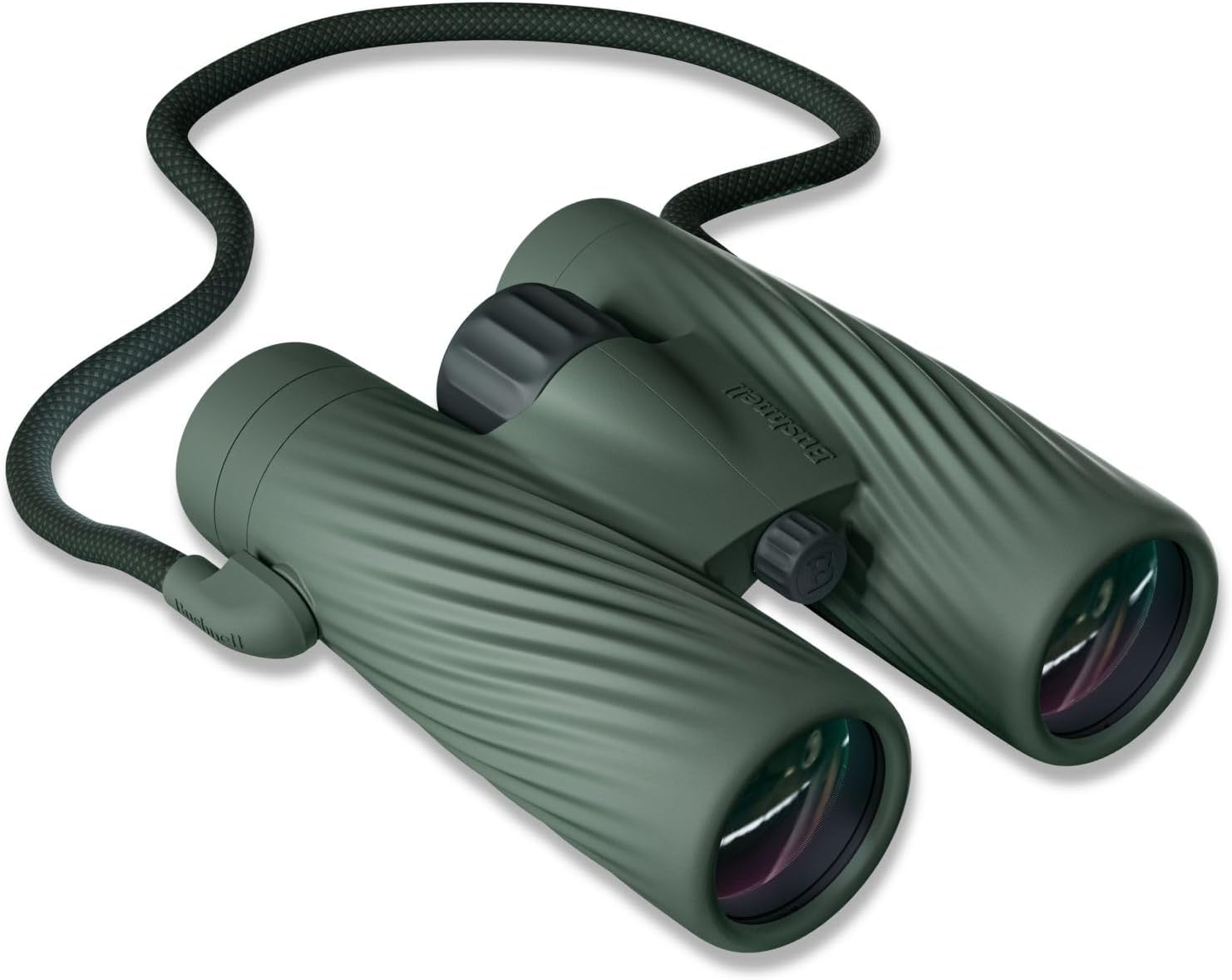
- Bright sharp view: Fully multi-coated optics with dielectric, phase-coated prisms for colour-accurate views.
- Wide field coverage: A field of about 131m at 1,000m is comfortable width for woodland and coast paths.
- Comfortable eye relief: Large 8x42 eyepieces suit relaxed viewing, though glasses wearers should check fit.
- Steady handheld viewing: Eight times magnification and grippy wave-pattern armour stay secure in wet hands.
- Precise focus control: A dioptre range listed at plus or minus five suits most eye differences.
- Brand-new listing: A very new model with little track record and unknown long-term durability.
- Eye relief unlisted: No eye relief figure is given, so glasses wearers should check before buying.
- Weight unlisted: The item weight on the listing is clearly wrong, so assume full-size heft.

- Bright sharp view: ED glass and phase-corrected prisms with R-type coating for high light transmission.
- Wide field coverage: Wide-angle eyepieces and a 131m listed field make finding birds easier.
- Comfortable eye relief: Long eye relief for spectacle wearers, listed at 17mm on the spec sheet.
- Steady handheld viewing: Eight times magnification in a rubber-armoured body gives a calm, easy view.
- Listing-led pick: No reviewer backing turned up in our research, so it is chosen on specs.
- Messy spec sheet: Some listing fields contradict each other, so we used only consistent figures.

- Bright sharp view: BaK-4 Porro prisms and FMC coatings give decent clarity for an entry-level pair.
- Wide field coverage: About 91m at 1,000m listed, which is fair width for a pocket pair.
- Comfortable eye relief: Fold-down eyecups and large eyepieces help glasses wearers stay comfortable.
- Steady handheld viewing: Small and light enough for one hand, and it fits a coat pocket.
- Precise focus control: A centre focus wheel plus dioptre adjustment makes it quick to share with kids.
- Dim small lenses: Its 25mm objectives struggle at dusk and work best in good daylight.
- Shaky 12x view: Twelve times is hard to hold steady, so rest your elbows on something.
Other Binoculars Worth Considering

- Schott ED glass from a premium optics name.
- Hydrophobic lens treatment helps shed rain.
- Close focus listed at 1.6m for garden birds.
- No editorial backing turned up in our research.
- Costs more than the Viking Vistron ED.

- Big 50mm objectives for dusk and stars.
- Fully multi-coated optics throughout.
- Field listed at 114m at 1,000m.
- Listed as water repellent, not waterproof.
- Heavier than the 8x42 picks above.

- Phase-coated BaK-4 prisms for contrast.
- Fully multi-coated lenses.
- Wide dioptre adjustment for uneven eyes.
- No editorial backing turned up in our research.
- Listing data is unclear on ED glass.

- About 300g, small enough for a jacket pocket.
- Focuses down to 2m, per the listing.
- Non-slip rubber armour for grip.
- Small objectives struggle at dusk.
- No editorial backing turned up in our research.
In-Depth Reviews of Our 10 Binocular Picks
What each spec means on a British walk or in a dark garden, and where each pair falls short. Picks with no editorial backing are judged on their listings.
#1 · Editor's Choice
Nikon Monarch M7 10x42 Roof Prism Binoculars
Judged as an all-rounder, this is the pair I'd point most people towards, and it ranked first in one of the roundups I read. Nikon fits ED glass and dielectric-coated, phase-corrected roof prisms, the expensive parts of any good binocular, into a body it describes as compact and lightweight. The 6.0° field gives 105m of width at 1,000m, generous for a 10x. That matters when a kestrel drops off a fence post on my Sunday reservoir loop. It isn't flawless, though, because hand shake shows at 10x on a windy ridge and the 2.5m close focus is longer than the Viking Vistron's.
The verdict: The strongest all-round pick here for birding and walking, provided you can hold 10x steady.
#2 · Runner-Up
Hawke Frontier APO 8x42 Birdwatching Binoculars
Lead with the flaw: the listing gives a dioptre range of only ±2, much narrower than the Viking Vistron's, so anyone whose eyes differ a lot between left and right should check that first. Everything else points the right way, with ED glass and apochromatic (APO) optics designed to cut the purple fringing you see around a heron against a bright sky. At 8x the view is calmer to hold than the Nikon's 10x, and 18mm of eye relief suits glasses. Hawke's Frontier range turns up in UK roundups, although the backing I found covered a sibling model rather than this exact APO version.
The verdict: A strong 8x42 for birders who care about colour accuracy, if the narrow dioptre range suits your eyes.
#3 · Best Value
Viking Optical Vistron ED 8x42 Binoculars
If you want ED glass without paying flagship money, this is the pair I'd look at first. Viking isn't a household name, but the Vistron ED appeared in a UK roundup during my research, and its specification reads like something a tier up, with ED objectives, phase-corrected BaK-4 prisms, nitrogen filling against fogging and twist-down eyecups. The field is about 130m at 1,000m, wide enough to follow lapwings across a frosty field, and the ±5 dioptre range is generous. The listing's weight figures disagree with each other, so plan for a full-size 8x42 rather than a featherweight.
The verdict: The best-value ED pair in this list, with the spec sheet of something pricier.
#4 · Best Image Stabilised
Canon 10x30 IS II Image Stabilised Compact Binoculars
Press a button and the shaking stops, which is the whole case for the Canon and a persuasive one at 10x, where unsteady hands blur the detail you paid for. A powered optical stabiliser counters your movement, while Porro II prisms and field flattener lenses keep the edges flat in a body weighing 600g. Nobody in the roundups I read singled out this exact model, so it's a spec-based pick. It runs on a pair of AA batteries, so carry spares, and the listing says it isn't water resistant, which rules out a damp Lake District morning without a bag. Its 14.5mm eye relief is also tighter than the Nikon Monarch M7's.
The verdict: Buy it for steady 10x views at sports, concerts and on boats. Keep it out of the rain.
#5 · Best for Stargazing
Celestron SkyMaster 15x70 Astronomy Binoculars for Stargazing
For stargazing, aperture wins, and 70mm objectives gather far more light than any 42mm pair here, which is why the SkyMaster 15x70 is the astronomy pick and why it had editorial backing in my research. From a suburban back garden like mine, a pair this size is the classic way to sweep the Moon's craters and bright star clusters before considering a telescope. A tripod adapter comes in the box. Use it. Holding 15x by hand for long is a losing fight. The 4.4-degree field is far too narrow for birds, and it's water resistant rather than waterproof, so dew is the real enemy.
The verdict: A dedicated astronomy binocular. Pair it with a tripod and keep a smaller pair for daytime walks.
#6 · Best for Field Sports
Vortex Viper HD 8x42 Roof Prism Binoculars
Look, I couldn't find a single reviewer recommending the Viper HD, so this pick rests on Vortex's own listing. It's premium-priced, closer to the Hawke than to anything budget. The listing describes a full-size 8x42 roof prism built for rough use, with XR anti-reflective coatings for low light, argon purging and O-ring seals for waterproof and fogproof performance, and ArmorTek coatings protecting the outer lenses from scratches, oil and dirt.
The verdict: A rugged, premium choice for shooting and stalking days, bought knowing it's listing-led.
#7 · Best Zoom Binoculars
OM System Olympus 8-16x40 S Zoom Binoculars
Zoom binoculars are a compromise, and I'd rather say so up front: push the lever from 8x to 16x and the view gets darker and narrower, while every heartbeat shows at the top end. Still, the zoom earns its keep when reading a ship's name off the Cornish coast or deciding whether a distant raptor is a buzzard or a red kite. OM System's 8-16x40 S uses BaK-4 Porro prisms, a rubber-coated body and a focus wheel the listing says works with gloves on, and it ships with a soft case, lens covers and strap. At 8x it covers roughly 87m at 1,000m, narrower than the Opticron Explorer's wide-angle view.
The verdict: Worth it if you want reach for coast paths and cruises. A fixed 8x or 10x is better for birding.
#8 · Best for Wet Weather
Bushnell A5 8x42 Waterproof Roof Prism Binoculars
Rain is the test most binoculars face in Britain, and the A5 carries the only IPX7 rating among my top ten. Bushnell calls it the flagship of its A-series, with fully multi-coated lenses, dielectric and phase-coated roof prisms, and a snap-lock strap that clips on and off quickly. There are two caveats. It's a brand-new listing with little track record, and the specification leaves out eye relief and close focus, so glasses wearers are guessing.
The verdict: A sensible wet-weather 8x42, as long as you're comfortable with an unproven newcomer.
#9 · Best for Glasses Wearers
Opticron Explorer WA ED-R 8x42 Binoculars
Wear glasses? Start here, because the Explorer WA ED-R pairs wide-angle eyepieces with long eye relief and the listing pitches it squarely at spectacle wearers. ED glass objectives and phase-corrected roof prisms with Opticron's R-type multi-coating make up the optical recipe, inside a nitrogen-filled, rubber-armoured body. I found no editorial coverage of this exact model, so treat it as a specification-led choice. The listing gives a 131m field and 17mm of eye relief, though some of its other fields contradict each other, so I've only used figures that fit the title.
The verdict: A thoughtful pick for glasses wearers who want a wide view, chosen on specs rather than reviews.
#10 · Best Budget
Occer 12x25 Compact Binoculars for Adults and Kids
I'll be straight: I almost left this off, because a 12x pair with 25mm lenses gives a small, dim image that's hard to hold steady. My dad still swears by an old pair of Porro binoculars and considers anything fancier showing off, and this is roughly his kind of purchase. It's the entry-level option many people choose for a child, a festival or a cruise, and it slips into a coat pocket. Occer lists BaK-4 Porro prisms and fully multi-coated lenses, but it has no independent recommendation behind it. Don't expect it to match the Canon at dusk.
The verdict: Fine as a cheap pocket pair for kids or travel. Not a birding binocular.
How We Researched and Scored These Binoculars
We didn't put these ten pairs through a lab. The ranking is built from UK editorial roundups, manufacturer spec sheets and amazon.co.uk listings, cross-checked against each other. Where a listing contradicted its own spec data, or a figure belonged to a sister model rather than the pair on sale, I left the number out.
What we compared for every pair:
- Editorial backing, and which picks have none
- Optics: magnification, objective size, glass type and prism design
- Field of view, close focus and eye relief, where the listing gives them
- Weather sealing as stated on the listing, from IPX7 down to water resistant
- Handling: size, focus controls, dioptre range and stabilisation
- What each spec means on a UK walk, at a reservoir hide or in a dark garden
How we weighted the scores:
- Optical quality (35%): glass, coatings and prism type
- Handling and steadiness (20%): magnification, size and stabilisation
- Comfort (15%): eye relief, eyecups and dioptre range
- Build and weatherproofing (15%): sealing, armour and fog protection
- Evidence (15%): editorial backing versus listing-only claims
What to Look For in Binoculars for Birding and Stargazing
In 8x42, the 8 is the magnification and the 42 is the width of each front lens in millimetres. Higher magnification brings a bird closer but also magnifies hand shake and narrows the view, which is why most birders settle on 8x or 10x. Bigger lenses gather more light, so a 42mm pair stays brighter at dusk than a 25mm compact on a gloomy British winter afternoon.
ED (extra-low dispersion) glass cuts the colour fringing around high-contrast edges, like a gull against a grey sky, and it separates the Nikon, Hawke, Viking and Opticron from the cheaper pairs here. Roof prisms make a slim binocular that's easier to seal, while Porro prisms, the zig-zag shape on the Celestron, Canon and Occer, give a bright image for less money. If you wear glasses, check eye relief first: around 16mm or more usually shows the whole field with your specs on.
For birding and hiking, an 8x42 or 10x42 roof prism is the safe default; for stargazing, go bigger, with 70mm lenses on a tripod, and for travel or kids, a compact fits a pocket. Entry-level pairs cover casual use, mid-range picks like the Viking add ED glass, and premium pairs like the Nikon and Hawke refine everything. Be wary of night vision claims on cheap listings, and of binoculars with a camera built in, which usually trade optics for a gimmick. If you want one pair for most things, buy the Nikon Monarch M7 and call it a day.
Key Specs Compared
| Product | Magnification | Field of View | Eye Relief | Our Score |
|---|---|---|---|---|
| Nikon Monarch M7 10x42 Roof Prism Binoculars | 10x42 | 105m at 1,000m (6.0°) | 16.4mm | 9.8 |
| Hawke Frontier APO 8x42 Birdwatching Binoculars | 8x42 | Not listed | 18mm | 9.6 |
| Viking Optical Vistron ED 8x42 Binoculars | 8x42 | approx. 130m at 1,000m | 17mm | 9.5 |
| Canon 10x30 IS II Image Stabilised Compact Binoculars | 10x30 | 105m at 1,000m (6.0°) | 14.5mm | 9.3 |
| Celestron SkyMaster 15x70 Astronomy Binoculars for Stargazing | 15x70 | 77m at 1,000m (4.4°) | 18mm | 9.1 |
| Vortex Viper HD 8x42 Roof Prism Binoculars | 8x42 | approx. 136m at 1,000m | 18mm | 9.0 |
| OM System Olympus 8-16x40 S Zoom Binoculars | 8-16x40 | approx. 87m at 1,000m at 8x | Not listed | 8.9 |
| Bushnell A5 8x42 Waterproof Roof Prism Binoculars | 8x42 | approx. 131m at 1,000m | Not listed | 8.8 |
| Opticron Explorer WA ED-R 8x42 Binoculars | 8x42 | 131 Meters | 17mm | 8.7 |
| Occer 12x25 Compact Binoculars for Adults and Kids | 12x25 | approx. 91m at 1,000m | Not listed | 8.6 |
Frequently Asked Questions
Which binoculars are best?
For most UK buyers, the Nikon Monarch M7 10x42 is the best all-round pair in this list. It combines ED glass, a wide 6.0° field and comfortable eye relief. If you'd rather have a steadier 8x view, the Hawke Frontier APO 8x42 is the alternative, and the Viking Vistron ED offers similar glass for less.
What brand is the best binocular?
At the very top, Swarovski binoculars, along with Zeiss and Leica, are the names most birders aspire to. Nikon, Hawke, Opticron and Vortex are established optics brands with mid-range and premium lines that cost far less. For astronomy, Celestron is the familiar name. Judge little-known Amazon brands on their spec sheets, not their marketing.
What binoculars are best for bird watching?
An 8x42 or 10x42 roof prism pair with ED glass suits most bird watching. 8x suits woodland; 10x helps on estuaries. From this list, the Nikon Monarch M7, Hawke Frontier APO and Viking Vistron ED are the strongest birding choices, and the Opticron suits glasses wearers.
What is better, 12x50 or 10x42 binoculars?
For most people, 10x42 is better because it's lighter and far easier to hold steady. A 12x50 gathers more light and reaches further, but hand shake shows at 12x. If you want more reach without the wobble, look at image stabilisation, as on the Canon 10x30 IS II, or use a tripod.
What binoculars are best for stargazing from a UK garden?
Large objectives matter most, so look at 50mm to 70mm pairs. The Celestron SkyMaster 15x70 is the dedicated choice here, used on a tripod with its included adapter. A 10x50 such as the Pentax SP is easier to hold by hand.
What should glasses wearers look for in binoculars?
Look for long eye relief, ideally around 16mm or more, and eyecups that twist or fold down. That lets you see the full field without taking your glasses off. The Opticron Explorer WA ED-R is pitched at spectacle wearers, and the Hawke, Viking and Celestron also list long eye relief.
The Bottom Line
If you want one pair that covers birding, hiking and the odd evening under the stars, the Nikon Monarch M7 10x42 is the one I'd buy: ED glass, a wide field and a body light enough to carry all day. Prefer a calmer 8x view? Get the Hawke Frontier APO. For astronomy, the Celestron SkyMaster 15x70 on a tripod is the specialist choice.
As an Amazon Associate I earn from qualifying purchases. See our affiliate disclosure for details. Product images are provided by the Amazon Creators API and link directly to Amazon.