10 Best Golf Balls of 2026, From Tour Urethane to Budget Distance
Most golfers buy a ball the way my dad does, grabbing whatever is cheapest in the pro shop or whatever turned up in the hedge on the 7th. After weeks with UK roundups, manufacturer spec sheets and amazon.co.uk listings, my pick of the best golf balls for most club players is the Titleist Pro V1, a three-piece cast urethane ball that UK reviewers backed more consistently than anything else.
A straight note: I haven't played every dozen here, so this is a research-built ranking of new boxes, not lake balls, and the lower picks are judged mainly on their listings. If you swing under 90 mph, skip ahead to the softer Srixon and Bridgestone.
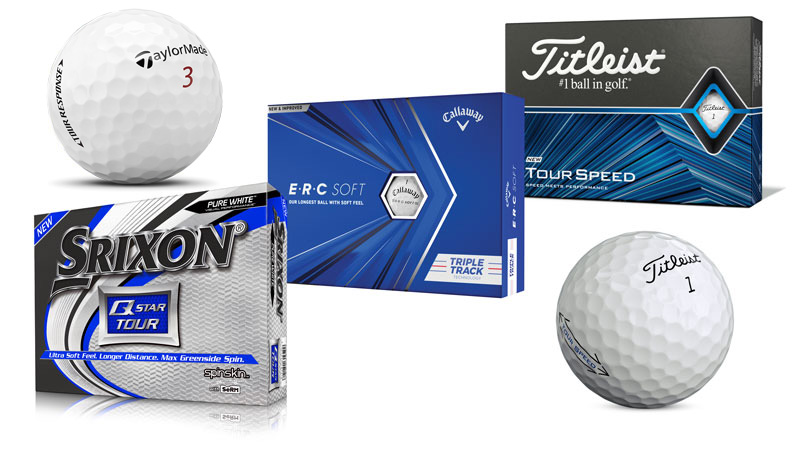

- Wedge spin control: Cast urethane elastomer cover. Listed for high greenside spin and drop-and-stop control.
- Tee shot flight: Penetrating, mid flight from 388 tetrahedral dimples. Handy into a stiff breeze.
- Soft impact feel: Softer gradient core, according to Titleist. The listing calls the feel very soft.
- Swing speed match: Suits roughly 95 mph+ driver speeds. Approx. 90 compression on the spec sheet.
- Layered core build: Three-piece build around a gradient core. Fewer layers, but tuned for speed.
- Strong reviewer backing: Top-ranked across the UK roundups we read. The most consistent pick in our research.
- Premium outlay: Top-tier cost per dozen. It stings when three vanish into the gorse.

- Wedge spin control: Dual-Spin Cover in soft cast urethane. Listed for high greenside spin.
- Tee shot flight: 322 seamless dimple pattern. Built for a penetrating flight off the tee.
- Soft impact feel: Five-layer, ultra-soft core construction. Listed at 83 compression on Amazon.
- Swing speed match: Aimed at roughly 90 mph+ driver speeds. A slightly wider window than the Pro V1.
- Layered core build: Tri-Fast Core with progressive compression. Designed for energy transfer at impact.
- Strong reviewer backing: Ranked highly in two UK roundups. A regular rival to the Pro V1.
- Unclear generation: The listing doesn't state a model year. Check the box on arrival.

- Wedge spin control: Urethane cover with high wedge spin listed. Low spin with the longer clubs.
- Tee shot flight: 332 HEX dimples plus the Tour Aero package. Aimed at a stable trajectory.
- Soft impact feel: Approx. 90 compression, level with the Pro V1. Feel sits in the mid-firm range.
- Swing speed match: Built for roughly 95 mph+ driver speeds. Quicker swings get the most from it.
- Layered core build: New Tour Fast Mantle in a four-piece build. Targets extra ball speed off the tee.
- Sister-model reviews: Most write-ups cover sister Chrome models. The Tour X gets fewer.

- Wedge spin control: Spin Skin+ coating grips wedge grooves for strong greenside spin at mid-range cost.
- Tee shot flight: A 338-cell Speed Dimple pattern designed to cut drag for straighter flight.
- Soft impact feel: Listed at 74 compression, softer than most urethane balls on this list.
- Swing speed match: Suits 80-95 mph driver speeds, which covers a large share of club golfers.
- Layered core build: FastLayer dual-compression core aimed at ball speed from moderate swings.
- Two-tone look: Half-and-half colouring is bold. Traditionalists may find it distracting on greens.

- Wedge spin control: Cast urethane cover listed for high wedge spin and low driver spin.
- Tee shot flight: Firm, fast design for low driver spin and a stable, predictable flight.
- Soft impact feel: Firm by intent at approx. 100 compression, a click strong players often like.
- Swing speed match: Built for 100 mph+ driver speeds, so best kept for genuinely quick swings.
- Layered core build: Four-piece urethane construction with the TRK360 alignment print on this dozen.
- Firm feel: Approx. 100 compression feels firm. Slower swings will struggle to load it.

- Wedge spin control: REACTIV urethane cover designed for players who want additional spin.
- Tee shot flight: A 330 dual dimple pattern listed for a straighter ball flight.
- Soft impact feel: Approx. 70 compression makes it one of the softest urethane balls here.
- Swing speed match: Built for swing speeds under 105 mph, which fits most weekend club golfers.
- Layered core build: VeloSurge core-mantle integration in a three-piece construction aimed at distance.
- Less coverage: Reviewers mostly covered its sister ball. The RXS has fewer write-ups.
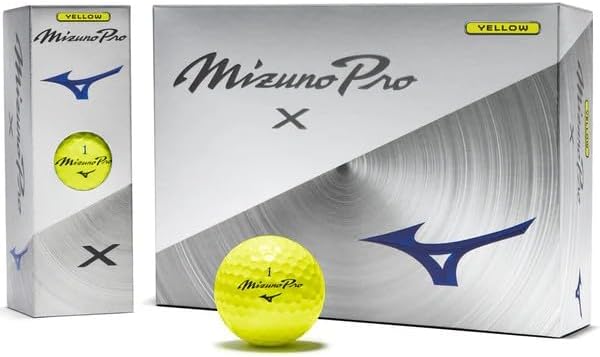
- Wedge spin control: Cast urethane cover with balanced, mid-spin characteristics around the green.
- Tee shot flight: 332 Axial Flow dimples aimed at a stable, penetrating flight in wind.
- Soft impact feel: The listing promises a soft feel, though spec data says approx. 100 compression.
- Swing speed match: Spec data points at 100 mph+ driver speeds, so quicker swings fit best.
- Layered core build: Thinner cover over a thicker mantle, built for faster ball speed off the tee.
- Construction conflict: The listing says 3-piece, spec data says 4-piece. We couldn't confirm which.
- Yellow only: This link buys the yellow dozen. Not ideal if you prefer white.

- Wedge spin control: Extra-thin cast urethane cover built for high short-game spin and control.
- Tee shot flight: 318 dimples under a glossy finish, and neon lime is easy to follow.
- Soft impact feel: Approx. 70 compression, listed as extra soft off the club face.
- Swing speed match: Designed for medium and low swing speeds, roughly 80-95 mph with a driver.
- No editorial backing: None of the UK roundups we read covered it. A listing-based pick.
- Neon colour: This link buys neon lime. Some golfers find bright balls odd on greens.
- Scuff risk: Thin urethane covers can scuff on cart paths. No durability data here.

- Wedge spin control: Mid-spin profile from a matte ionomer cover, with less bite than urethane.
- Tee shot flight: High launch on the spec sheet, with an oversized core targeting distance.
- Soft impact feel: V-SF matte coating listed as softer, and matte cuts glare on bright days.
- Swing speed match: Suits 85-100 mph driver speeds, a broad middle band of golfers.
- Layered core build: Three-piece build around an oversized core, aimed at efficient energy transfer.
- Ionomer cover: No urethane here. Expect less check on short pitches than tour balls.
- Conflicting specs: Listing and spec data disagree. Compression and dimple count both differ.
- Listing-only pick: No UK roundup we read covered it. Judged on its listing alone.

- Wedge spin control: Soft moulded urethane cover listed for greenside grip and a soft feel.
- Tee shot flight: Low driver spin on the spec sheet, with a tetrahedron dimple pattern.
- Soft impact feel: Urethane cover feels soft per Maxfli, but the approx. 100 compression core is firm.
- Swing speed match: Pitched at 100 mph+ driver speeds, firm enough for quick, aggressive swings.
- 2023 model: This is the 2023 edition. A newer Maxfli tour ball may have replaced it.
- Reviewer silence: None of the UK roundups we read included it. Specs carry this pick.
- Firm core: Approx. 100 compression. Slower swingers may struggle to get it working.
Other Golf Balls Worth Considering

- Fifteen balls in the box, not twelve.
- Surlyn cover listed as cut-proof.
- Aimed at swing speeds under 90 mph.
- Listing says 90 compression, spec data says approx. 70.
- No editorial coverage found in our research.
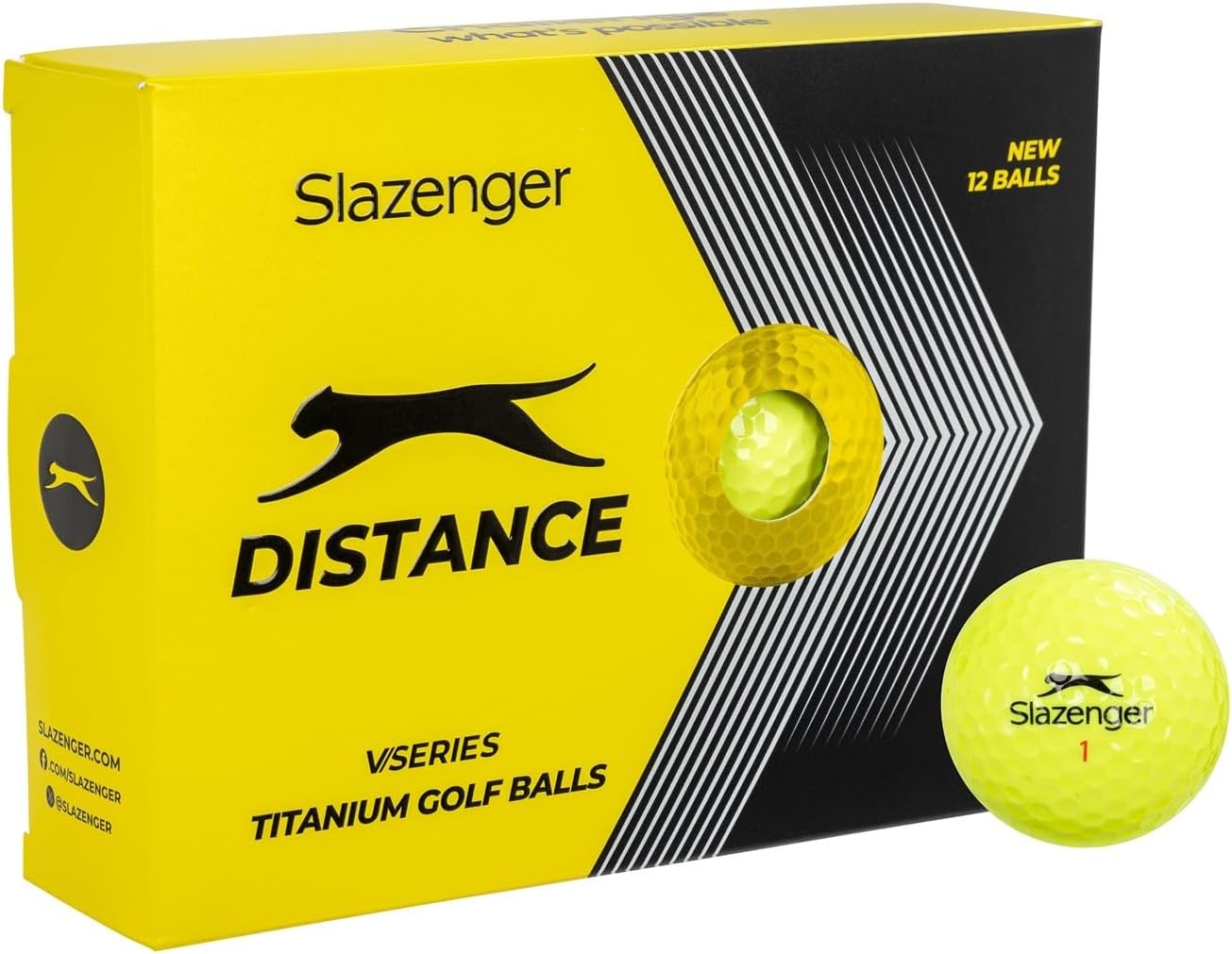
- Titanium core listed for distance.
- Surlyn cover chosen for durability.
- Listed with a high flight and soft feel.
- Listing and spec data disagree on spin and dimples.
- A distance ball, so expect little greenside check.

- RM soft core under a durable ionomer shell.
- 368 dimples for a stable trajectory.
- Uses some recycled material.
- Partly Japanese listing title, so likely an imported box.
- No editorial coverage found in our research.

- Urethane cover from a lesser-known brand.
- Bold Track alignment line for putting.
- 85 compression suits most swings.
- Little-known brand with no editorial coverage.
- Its lab-tested claim comes from the brand itself.
In-Depth Reviews of Our 10 Golf Ball Picks
What each listed spec means on a UK course, where each ball falls short and who it suits. Lower picks rely on listings, and I say so.
#1 · Editor's Choice
Titleist Pro V1 Golf Balls, 12-Ball Dozen
Judge it by how few weaknesses turn up and the Pro V1 is the safe answer. It was the most consistently backed ball in the UK roundups I read. The spec sheet explains why: a three-piece build, a cast urethane elastomer cover and 388 tetrahedral dimples for a penetrating flight that should hold its line on an exposed links. Titleist pitches it at 95 mph+ driver speeds with approx. 90 compression, though, so it isn't the obvious ball for a slow swing. It's also the priciest habit here. If you lose four a round in the gorse, as I do every April, the softer Srixon Q-Star Tour Divide makes more sense.
The verdict: The benchmark for golfers quick enough to use it, and the one I'd buy first.
#2 · Runner-Up
TaylorMade TP5 Golf Balls, 12-Ball Dozen
Most tour balls stop at three or four layers. The TP5 listing claims five, with a Tri-Fast Core under a Dual-Spin Cover of soft cast urethane and a 322 seamless dimple pattern for a penetrating flight. The listing gives 83 compression while the spec data says approx. 85, softer than the leader either way, and TaylorMade pitches it at 90 mph+ driver speeds. My gripe is the listing itself, which doesn't say which generation is in the box (the photos don't settle it either), so check the model year when the parcel lands.
The verdict: A close second, with a slightly softer listed feel and a vaguer listing.
#3 · Best for Distance
Callaway Chrome Tour X Premium Golf Balls, 12-Ball Dozen
If your driver swing is quick and you want the long clubs to spin less, this is the Callaway to look at. UK write-ups mostly covered sister Chrome models, whereas this is the newest Tour X, with a Tour Fast Mantle in a four-piece build. Callaway lists low long-game spin, high wedge spin, 332 HEX dimples and its Tour Aero package, with approx. 90 compression and a 95 mph+ driver target. There's little independent commentary on this exact ball, which is why it sits below the TaylorMade TP5. It's also a firmer proposition than the Bridgestone Tour B RXS.
The verdict: A strong long-game ball for faster swings, judged mostly on its spec sheet.
#4 · Best Value
Srixon Q-Star Tour Divide Two-Tone Urethane Golf Balls, One Dozen
This is the ball that answers the question most club golfers actually have: can I get urethane spin without a tour-ball swing? The Q-Star Tour Divide pairs an ultra-thin urethane cover and Spin Skin+ coating with a FastLayer core listed at 74 compression (spec data says approx. 72; I've followed the title). It's built for 80-95 mph driver speeds, which in my Saturday fourball covers everyone except the lad who plays off scratch, and three UK roundups backed it. The two-tone cover splits opinion. My dad would call it a beach ball.
The verdict: The value pick: proper urethane spin for moderate swings, if the look suits you.
#5 · Best for Fast Swings
Wilson Staff Model X Golf Balls, 12-Ball Dozen
Let's start with the drawback, because it decides whether this ball suits you: at approx. 100 compression, aimed at 100 mph+ drivers, the Staff Model X is firm. Slower swings won't get much from it. For quick players the four-piece cast urethane build makes sense, with low driver spin, high wedge spin, 302 dimples and a paint process Wilson describes as finely controlled for consistent flight. Measured against the Callaway Chrome Tour X, it's the firmer and more specialist choice, and I'd only point genuinely quick swingers at it.
The verdict: Fast swing? Shortlist it, and everyone else should look for something softer.
#6 · Best for Moderate Swings
Bridgestone Tour B RXS Golf Balls, 12-Ball Dozen
Buy this if your driver speed sits well below tour level but you still want a ball that checks up. Bridgestone pitches the Tour B RXS at swing speeds under 105 mph, with VeloSurge core-mantle integration, approx. 70 compression and a REACTIV urethane cover aimed at players who want additional spin. UK roundups mostly reviewed its sister ball, though, so I'm leaning on the spec sheet more than I'd like. And on soft, wet winter greens, where an approach plugs rather than releases, that extra spin matters less than the marketing suggests.
The verdict: The softest tour-style option for moderate swings, with thinner outside evidence.
#7 · Best Yellow Tour Ball
Mizuno Pro X Yellow Golf Balls, 12-Ball Pack
Yellow is the first thing you notice, and on a November round with leaves piled under every oak, that's a practical choice rather than a fashion one. The Pro X uses a cast urethane cover, 332 Axial Flow dimples and a thinner cover over a thicker mantle for ball speed. Then it gets muddled. The listing says 3-piece while the spec data says 4-piece, and the listing promises a soft feel while the spec data gives approx. 100 compression and points at 100 mph+ driver speeds. It's firmer than the Vice Pro Soft, the other bright urethane ball here.
The verdict: A sensible winter ball for quick swings, once you accept the spec confusion.
#8 · Best Soft Urethane
Vice Pro Soft Neon Lime Golf Balls, One Dozen
Vice designs the Pro Soft, a neon lime dozen on this link, for medium and low swing speeds, roughly 80-95 mph with a driver, and pairs approx. 70 compression with an extra-thin cast urethane cover for short-game spin, a closed alignment line and 318 dimples. I didn't find it in any UK roundup, so treat it as a listing-based pick rather than a reviewer favourite. Bright colours split opinion at my club, and the Srixon Q-Star Tour Divide is the better-backed alternative.
The verdict: Worth a try for soft-swing urethane fans who accept it's listing-led.
#9 · Best High-Visibility Ball
Volvik Vivid Combi Dual-Colour Golf Balls, One Dozen
I'll be straight: this is on the list for visibility, not spin. The Vivid Combi has a dual-colour, matte ionomer cover with Volvik's V-SF coating and an Easy Alignment system. Spec data puts it at 85-100 mph driver speeds with mid spin and a high launch. The listing and spec data disagree on compression and dimple count, and no UK roundup I read covered it. Ionomer won't grab a wedge like urethane does, but on a grey February morning a matte coloured ball is far easier to pick out against wet grass than a white one.
The verdict: Buy it to find your ball, not to stop it.
#10 · Best Balanced Tour Ball
Maxfli Tour X 2023 Golf Balls, 12-Ball Dozen
Maxfli's selling point here is balance. You get a patented balancing process and alignment aid, a soft moulded urethane cover, a four-piece build, a tetrahedron dimple pattern and low driver spin. Spec data lists a firm approx. 100 compression for 100 mph+ swings, so despite the soft cover wording this is a ball for quick players, not a budget ball for beginners. It's also the 2023 edition, and none of the UK roundups I checked included it, so it covers the Wilson Staff Model X's ground with less outside evidence.
The verdict: Fine for fast swings, but treat it as a specs-only pick.
How We Researched and Scored These Golf Balls
We didn't put these balls on a launch monitor or a hitting robot. The ranking is built from UK editorial roundups, manufacturer spec sheets and amazon.co.uk listings, cross-checked against each other, and where a listing contradicted its own spec data I followed the title or left the number out. Every pick is a new box, not lake balls.
What we compared for every ball:
- Editorial backing, and which picks have none
- Construction: two-piece, three-piece or multi-layer
- Compression and the driver swing speed it's pitched at
- Cover material: cast urethane versus ionomer or Surlyn
- Spin profile off the tee and around the green
- What the link actually buys: a dozen, a 15-ball pack or an import box
How we weighted the scores:
- Short-game spin and cover (30%): cover material and listed greenside spin
- Long-game flight (25%): driver spin, launch and dimple design
- Swing speed fit (20%): how many club golfers the compression suits
- Evidence (15%): editorial backing versus listing-only claims
- Listing clarity (10%): model year, pack size and spec consistency
What to Look For in a Golf Ball
Start with your swing speed, not the ball a tour pro uses, because compression is the quick guide: the firm balls here, at approx. 100, are pitched at 100 mph+ drivers, while the Bridgestone Tour B RXS and Vice Pro Soft sit at approx. 70 for slower swings. Most club golfers I play with fall somewhere in the 80-95 mph band, which is exactly why the Srixon Q-Star Tour Divide earns its place. If you don't know your number, a launch monitor session at your local range will tell you.
Then decide how much the short game matters to you. Urethane covers grip wedge grooves and check on the green, while ionomer or Surlyn covers, used on the Nitro, Slazenger and Honma, trade that bite for durability and lower spin off the tee. High handicappers who lose several balls a round are often better served by a cheap distance ball than by a premium tour ball they can't keep in play.
Winter matters in the UK, because on soft, muddy fairways, temporary greens and leaf-strewn rough, coloured and matte balls such as the yellow Mizuno Pro X or the Volvik Vivid Combi are easier to spot, and spin matters less when approaches plug. Check what each link buys, too: most are dozens, the Nitro is a 15-ball pack and the Honma looks like an imported box. Beginners suit entry-level distance balls. Improvers suit mid-range urethane. If you have a fast, repeatable swing, buy the Titleist Pro V1 and call it a day.
Key Specs Compared
| Product | Construction | Compression | Swing Speed | Our Score |
|---|---|---|---|---|
| Titleist Pro V1 Golf Balls, 12-Ball Dozen | 3-piece | approx. 90 | 95 mph+ driver | 9.8 |
| TaylorMade TP5 Golf Balls, 12-Ball Dozen | 5-piece | 83 (listing) | 90 mph+ driver | 9.6 |
| Callaway Chrome Tour X Premium Golf Balls, 12-Ball Dozen | 4-piece | approx. 90 | 95 mph+ driver | 9.5 |
| Srixon Q-Star Tour Divide Two-Tone Urethane Golf Balls, One Dozen | 3-piece | 74 (listing) | 80-95 mph driver | 9.3 |
| Wilson Staff Model X Golf Balls, 12-Ball Dozen | 4-piece | approx. 100 | 100 mph+ driver | 9.1 |
| Bridgestone Tour B RXS Golf Balls, 12-Ball Dozen | 3-piece | approx. 70 | under 105 mph driver | 9.0 |
| Mizuno Pro X Yellow Golf Balls, 12-Ball Pack | Listing conflicts (3- or 4-piece) | approx. 100 | 100 mph+ driver | 8.9 |
| Vice Pro Soft Neon Lime Golf Balls, One Dozen | 3-piece | approx. 70 | 80-95 mph driver | 8.8 |
| Volvik Vivid Combi Dual-Colour Golf Balls, One Dozen | 3-piece | Listing conflicts | 85-100 mph driver | 8.7 |
| Maxfli Tour X 2023 Golf Balls, 12-Ball Dozen | 4-piece | approx. 100 | 100 mph+ driver | 8.6 |
Frequently Asked Questions
Which golf balls are the best?
For most UK golfers with a reasonably quick swing, the Titleist Pro V1 is the best golf ball on this list, and it was the most consistently backed ball in the UK roundups we read. The TaylorMade TP5 is a close alternative, while the Srixon Q-Star Tour Divide is the value pick for moderate swing speeds.
Which golf ball is best for me?
Match the ball to your driver swing speed first, then decide how much greenside spin you need. Below roughly 90 mph, look at softer balls such as the Bridgestone Tour B RXS or Srixon Q-Star Tour Divide. Above 100 mph, firmer balls like the Wilson Staff Model X make more sense.
What type of golf ball is best for beginners?
A durable two-piece distance ball is usually the best start for beginners. You'll lose plenty while learning, and an ionomer or Surlyn cover shrugs off scuffs better than thin urethane. The Nitro 15-ball pack and the Slazenger dozen are sensible options.
Do expensive golf balls really make a difference?
They can, but mostly for consistent strikers who find the middle of the face. Premium urethane balls like the Pro V1 add greenside spin and control, but if you lose three balls a round or rarely chip close, that extra spin won't change your score much. A mid-range urethane ball or a cheap distance ball is the smarter buy until your strike improves.
What is the best golf ball for high handicappers?
For most high handicappers, a soft, durable ball that flies straight beats a tour ball. Low-compression options like the Bridgestone Tour B RXS suit moderate swings, while cheap distance balls such as the Nitro or Slazenger cost less to lose in the gorse.
What's the difference between urethane and ionomer golf balls?
Urethane covers are softer and grip wedge grooves for more spin, while ionomer covers are tougher and spin less. Nine of our top ten use urethane, whereas the Volvik, Nitro, Slazenger and Honma use ionomer or Surlyn. Ionomer suits golfers who value durability; urethane suits players who chip well enough to use the extra check.
The Bottom Line
If your swing is quick and consistent, the Titleist Pro V1 is the ball I'd buy, with three-piece cast urethane, high greenside spin and the strongest backing in our research. If you swing more moderately, the Srixon Q-Star Tour Divide gives you urethane spin at 74 compression for a mid-range outlay, and if you lose balls by the handful, a durable distance dozen is the honest answer.
As an Amazon Associate I earn from qualifying purchases. See our affiliate disclosure for details. Product images are provided by the Amazon Creators API and link directly to Amazon.