10 Best Heart Rate Monitor of 2026, Chest Straps and Armbands for Training Zones
Every heart rate monitor on this list has a problem. Some are fixable, some aren't, and most surface mid-interval. For the best heart rate monitor most people can buy, my pick is the Polar H10 chest strap: it reads the heart's electrical signal directly, pairs with almost anything you own and runs for months on a coin cell.
A plain note on how this list was made: I didn't strap all ten on. It's built from UK editorial roundups, spec sheets and amazon.co.uk listings, and the lower picks are little-known brands judged on their listings. These are training tools, not medical devices. Want an armband instead of a chest strap? Start with the Scosche Rhythm+ 2.0.
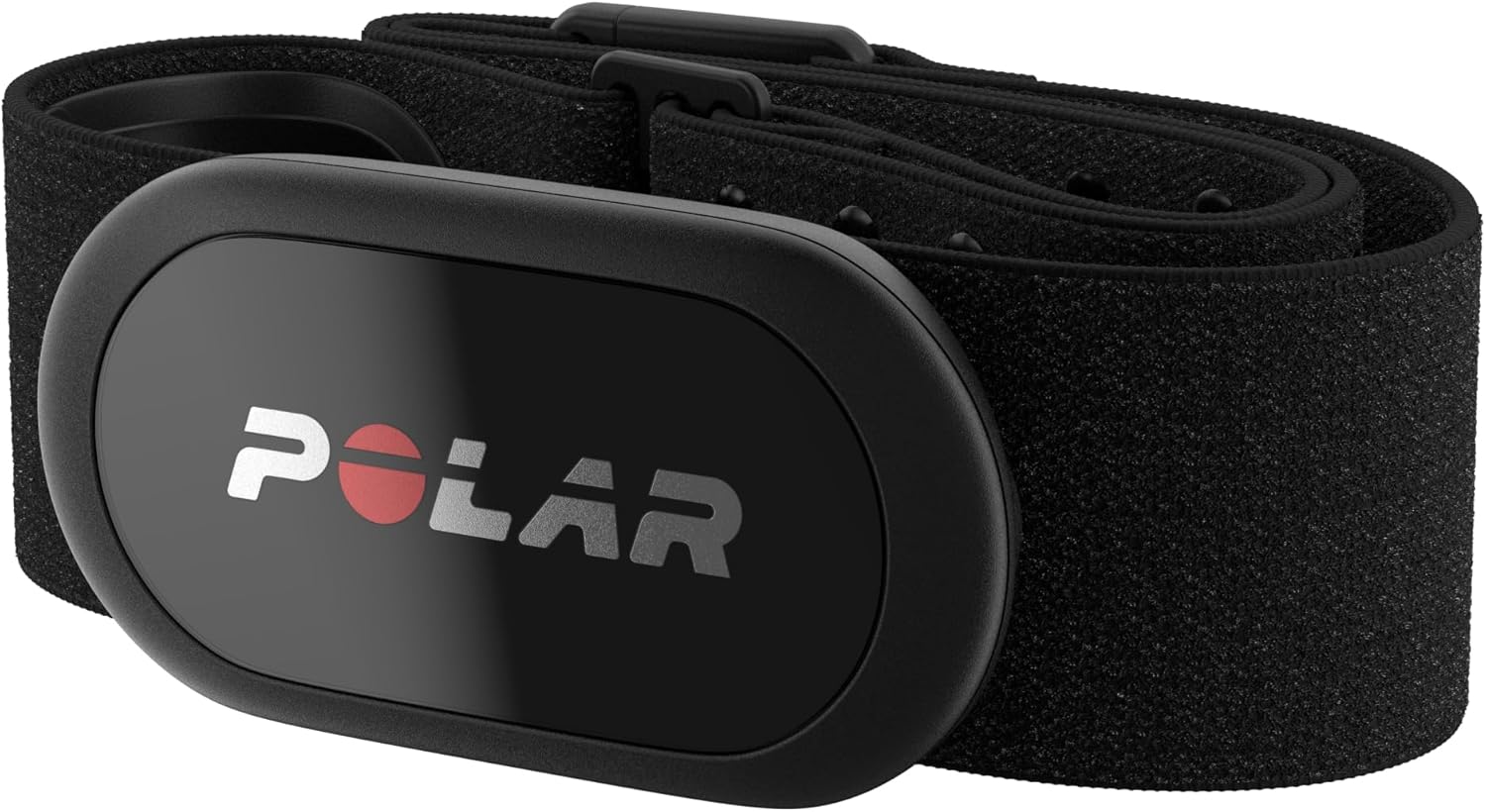
- Training zone feedback: ECG chest sensor suits interval work, with zones updating quickly as effort changes.
- Dual-band pairing: Bluetooth, ANT+ and 5 kHz, with two Bluetooth devices connected at once.
- Easy battery upkeep: CR2025 coin cell lasts around 400 hours, so there's no cable to remember.
- Secure training fit: Pro strap uses silicone dots and a secure buckle to stay put during sprints.
- Workout-ready build: Waterproof to 30 m and stores one session onboard without a phone or watch.
- Useful training extras: HRV tracking and firmware updates are both handled through the Polar Beat app.
- Strap size: This listing is the M-XXL strap. Smaller chests need the XS-S version.

- Training zone feedback: Sends real-time heart rate and HRV data straight to compatible Garmin watches.
- Dual-band pairing: Bluetooth and ANT+ connections cover watches, bike computers, gym equipment and apps.
- Easy battery upkeep: Rechargeable through USB-C and listed at up to 2 months per charge.
- Secure training fit: Machine-washable strap, M-XL on this listing, with an XS-S size also available.
- Workout-ready build: Records workouts without a watch, which suits five-a-side and team training.
- Useful training extras: Running dynamics include stride length and ground contact balance on compatible watches.
- Watch dependence: Running dynamics and indoor pace need a compatible Garmin watch to appear.

- Training zone feedback: Real-time heart rate from a chest pod gives steady data for Zwift sessions.
- Dual-band pairing: ANT+ and Bluetooth together connect phones, gym equipment and Wahoo bike computers.
- Easy battery upkeep: Rechargeable battery lasts over 100 hours, and the LED shows battery status.
- Secure training fit: Slim, soft strap holds the pod securely in place during hard efforts.
- Workout-ready build: IPX7 rated against sweat and rain, with a pod listed at 30 grams.
- No onboard memory: The listing mentions no workout storage. Keep your phone or watch connected.

- Training zone feedback: Five-colour LED changes with your heart rate zone, which helps in gym mirrors.
- Dual-band pairing: Bluetooth 5.0 and ANT+ work with Strava, Zwift, Peloton and Polar Beat.
- Easy battery upkeep: Built-in rechargeable battery gives up to 50 hours per charge, no coin cells.
- Secure training fit: Fully adjustable fabric strap is lighter and thinner than the previous version.
- Workout-ready build: Low-profile sensor suits everyday runs, spin classes and gym circuit sessions.
- Model confusion: Older CooSpo specs float around online. Check the listing says H9Z rechargeable.

- Training zone feedback: Optical sensor plus accelerometer provides real-time heart rate for steady zone sessions.
- Dual-band pairing: ANT+ and Bluetooth Smart pair with most third-party apps and gym equipment.
- Easy battery upkeep: Rechargeable lithium-ion battery offers up to 24 hours of tracking per charge.
- Secure training fit: Adjustable band fits forearm, biceps or triceps, with no pressure across the chest.
- Workout-ready build: IP68 rated, and the listing says you can swim, run or train outdoors.
- Short battery: Up to 24 hours per charge. Expect to plug it in most weeks.
- Interval lag: Optical arm sensors can trail sudden sprints. A chest strap reacts faster.

- Training zone feedback: Optical sensor records real-time heart rate, which is fine for steady runs and classes.
- Dual-band pairing: Bluetooth and ANT+ dual mode connects to Garmin, Wahoo, Strava and gym equipment.
- Easy battery upkeep: Rechargeable with a magnetic charging cable and listed at 20+ hours per charge.
- Secure training fit: Adjustable armband carries a pod listed at 7.7 grams, so it's easily forgotten.
- Workout-ready build: IP67 sweat and water resistance, plus a blue LED confirming heart rate and connection.
- Listing-only pick: No editorial coverage found. You rely on the listing and returns window.

- Training zone feedback: Chest strap sensor wakes in under a second, so readings start almost immediately.
- Dual-band pairing: Bluetooth 4.2 and ANT+ pair with Zwift plus Wahoo and iGPSPORT bike computers.
- Easy battery upkeep: Replaceable CR2032 coin cell is listed at 800 hours, so changes are rare.
- Secure training fit: Thin, energy-saving sensor keeps a low profile under a running base layer.
- Workout-ready build: IP67 waterproof rating, with an LED confirming the strap is reading and connected.
- Older Bluetooth: Bluetooth 4.2 is an older standard. Fine for pairing, but not the newest.
- Unknown brand: No editorial coverage found. Support depends on the seller's own service.

- Training zone feedback: Coloured LEDs show zones, and vibration alerts flag when you leave a custom zone.
- Dual-band pairing: Bluetooth 5.0 and ANT+ work with Wahoo Fitness, Strava and Polar Beat.
- Easy battery upkeep: Listed at 65 hours per charge through a Type-C magnetic charging connection.
- Secure training fit: Soft, breathable adjustable strap wears comfortably on the forearm or upper arm.
- Workout-ready build: Light optical pod suits daily indoor rides, treadmill runs and gym sessions.
- Thin buyer history: A newer listing with few buyer reviews so far. Durability is hard to judge.
- No water rating: The listing gives no water rating at all. Skip it for swimming.
- Interval response: Arm-based optical readings may trail quick efforts. Hill repeats suit a chest strap.

- Training zone feedback: CL830 optical sensor tracks real-time heart rate and training zones in your app.
- Dual-band pairing: Bluetooth and ANT+ dual band, with over 200 compatible apps including Zwift and Peloton.
- Easy battery upkeep: Rechargeable lithium battery listed at 60 hours, with an LED charging indicator.
- Secure training fit: Adjustable arm band keeps everything off the chest for long indoor rides.
- Vague model naming: No model number on the listing. Harder to research before you buy.
- Missing water rating: The listing doesn't state any water or sweat rating anywhere.

- Training zone feedback: LED colour zones on the pod help you hold a target training effort.
- Dual-band pairing: Bluetooth and ANT+ pair with Garmin, Polar, Apple and Samsung watches.
- Easy battery upkeep: Rechargeable through the USB charger supplied in the box after each session.
- Secure training fit: Nylon armband sized S-L, worn on either the forearm or the bicep.
- Battery claims vary: The listing gives two different battery figures. Plan on charging it often.
- Strava premium: The listing flags Strava support as premium only. Check your subscription first.
In-Depth Reviews of Our 10 Heart Rate Monitor Picks
What each strap or armband's listed specifications mean for zone training in a UK gym or on the turbo trainer, where each falls short, and which picks rest on listings rather than editorial backing.
#1 · Editor's Choice
Polar H10 M-XXL Heart Rate Sensor with Pro Chest Strap
Most people shopping for a chest strap want numbers they can trust when an interval session gets ugly. That's why the Polar H10 sits at the top, and UK roundups backed it more consistently than anything else in my research. It reads the heart's electrical signal at the chest rather than shining light through skin, and it broadcasts over Bluetooth, ANT+ and 5 kHz with two simultaneous Bluetooth connections, so a watch and a gym bike console can share it. A coin cell runs it for around 400 hours. It isn't faultless, though: this listing is the M-XXL strap, so slimmer chests need the XS-S version, and the onboard memory holds only a single session.
The verdict: The safest buy for zone training. Just order the strap size that fits your chest.
#2 · Runner-Up
Garmin HRM-600 Premium Heart Rate Monitor Chest Strap, M-XL
If you already wear a Garmin watch, this is the strap that gets the most out of it. The HRM-600 replaces the HRM-Pro that independent reviewers covered for years, so I'm judging the new model on Garmin's own listing rather than on borrowed verdicts. It adds a rechargeable battery listed at up to two months, a machine-washable strap and onboard recording for five-a-side training where watches aren't allowed, syncing to Garmin Connect, plus running dynamics such as stride length and ground contact time balance. The trade-off is lock-in. Most of that extra detail needs a compatible Garmin watch, and it sits a full price tier above the Polar H10.
The verdict: Worth it if you live in Garmin Connect. Otherwise, the Polar does the core job.
#3 · Best Rechargeable Strap
Wahoo Trackr Rechargeable Heart Rate Monitor Chest Strap
Indoor cyclists training in a cramped spare room are the obvious audience for the Trackr, Wahoo's successor to the TICKR that UK reviewers covered. It swaps the coin cell for a rechargeable battery listed at more than 100 hours, a good few months of turbo sessions. ANT+ and Bluetooth work together, so a bike computer and the Zwift app can both read it, and the LED confirms whether it has found your pulse, is still connected or is running low. What's missing is memory. Unlike the Polar H10 and the Garmin, the listing mentions no onboard storage, so a device has to stay connected, but most turbo set-ups have one anyway.
The verdict: A tidy rechargeable strap for indoor riders who keep a device connected.
#4 · Best Budget
CooSpo H9Z Rechargeable Heart Rate Monitor Chest Strap
Read this listing carefully before you buy, because CooSpo sells several similar straps and older H6 specifications with a coin cell still circulate online. This link is the H9Z, with a built-in rechargeable battery rated for up to 50 hours per charge, Bluetooth 5.0 and ANT+ compatibility with Strava, Zwift, Peloton and Polar Beat, and a five-colour LED that changes with your heart rate zone, which is oddly useful in a gym mirror. That's a sensible specification for a cheap heart rate monitor. But buyer feedback looks noticeably more mixed than for the Wahoo Trackr or the Polar, so keep the returns window in mind.
The verdict: A sensible budget chest strap, provided the listing still says H9Z.
#5 · Best Armband
Scosche Rhythm+ 2.0 Optical Heart Rate Monitor Armband
Some people simply can't get on with a chest strap, and the Rhythm+ 2.0 is the one I'd point them towards. It sits on the forearm, biceps or triceps and combines an optical sensor with an accelerometer, so nothing presses on your sternum during a long Sunday run. The rechargeable battery is listed at up to 24 hours, the IP68 rating means the listing is happy for you to swim with it, and ANT+ plus Bluetooth Smart covers most gym equipment and training apps. The limitation is physics rather than Scosche. Optical arm sensors, however, generally trail sudden changes in effort, so a hill sprint may register slightly later than it would on a chest strap.
The verdict: The armband to buy if chest straps are a non-starter for you.
#6 · Featherweight Armband
moofit HW401 Optical Heart Rate Monitor Armband
Compared with the Scosche, the moofit HW401 asks for less money but gives up a little in return. It's an optical armband with Bluetooth and ANT+, IP67 protection against sweat and rain, and a rechargeable battery with a magnetic cable, listed at 20 hours or more per charge. The pod is listed at 7.7 grams, light enough to forget on your forearm during a circuits class, and a blue LED flashes quickly until it finds your pulse. I couldn't find any editorial coverage of this model, so it's here on its listing alone. Treat it as a sensible punt, not a proven performer.
The verdict: Fine for steady sessions on a budget, with modest expectations.
#7 · Longest Listed Battery
Geoid HS500 Heart Rate Monitor Chest Strap
Eight hundred hours is the listed life of the replaceable CR2032 coin cell in the Geoid HS500, which the listing calculates as roughly two and a half years for someone training an hour a day, four days a week. Otherwise it's a plain chest strap with Bluetooth 4.2 and ANT+, an IP67 rating and a listed wake-up time under a second. Geoid is a little-known brand without editorial coverage, so this is a listing-based pick, and its Bluetooth 4.2 radio is older than those on the CooSpo and iGPSPORT. As a spare strap for the gym bag it makes sense, but I wouldn't make it my only one.
The verdict: A low-fuss coin-cell strap. Judge it on the listing, not on reputation.
#8 · Best for Zone Alerts
iGPSPORT HR70 Optical Heart Rate Monitor Armband
Drifting out of zone two on a long ride is the problem this armband tries to fix. The HR70 shows your zone through coloured LEDs and vibrates when you stray outside custom zones, which is handier on a Sunday club run than squinting at a bike computer in the rain. The battery is listed at 65 hours with Type-C magnetic charging, and pairing covers Bluetooth 5.0 and ANT+. The downside is evidence. iGPSPORT is better known for bike computers, this listing is new with very little buyer history, and there's no water rating, so skip it for swimming. Next to the Scosche, it trades the swim rating for vibration alerts and longer listed battery life.
The verdict: Good for cyclists who'd rather feel a zone alert than look for one.
#9 · Best Rechargeable Budget Armband
Fitcent Rechargeable Optical Heart Rate Monitor Armband
There's no model number on the Fitcent listing, which bothered me more than it probably should. The specification is reasonable: an optical armband with a CL830 sensor, Bluetooth and ANT+, a rechargeable lithium battery listed at 60 hours and an LED that turns solid green once charging finishes. Zwift, Peloton, Polar Beat and Komoot are among more than 200 compatible apps. But it's a listing-based pick without editorial backing, and with no water rating given, it belongs on indoor rides rather than wet runs.
The verdict: A reasonable indoor armband if you're comfortable buying on specs alone.
#10 · Best for Forearm Wear
Cardiosport Optic Heart Rate Monitor Armband, Size S-L
Look, the Cardiosport Optic is a simple armband, and that's mostly fine. It wears on the forearm or bicep, uses an optical PPG sensor, displays LED colour zones and pairs over Bluetooth and ANT+ with Garmin, Polar, Apple and Samsung watches, plus apps like Zwift, Rouvy and Peloton, and the box includes a USB charger. My reservation is the battery. The listing quotes two different figures, so I'd plan on charging it every few sessions. Buyer history is limited too, and the Fitcent offers a longer listed battery for similar money.
The verdict: A simple armband for indoor training. Check the battery claims against your routine.
How We Researched and Scored These Heart Rate Monitors
We didn't put these ten monitors through a lab. The ranking is built from UK editorial roundups, manufacturer spec sheets and amazon.co.uk listings. Where a listing contradicted its own spec data, as with the CooSpo and Cardiosport battery figures, I followed the listing title or left the number out.
What we compared for every monitor:
- Sensor type: ECG chest strap versus optical armband
- Connectivity: Bluetooth, ANT+ and how many devices can connect at once
- Battery: coin cell or rechargeable, and the listed life
- Fit and sizing, including which strap size each listing actually sells
- Extras: onboard memory, HRV, running dynamics and zone alerts
- Editorial backing, and which picks have none
How we weighted the scores:
- Sensor and data quality (30%): chest ECG or optical, and how well each suits interval work
- Connectivity (20%): dual-band pairing with watches, apps, bike computers and gym kit
- Battery and upkeep (20%): listed life and how easy it is to keep running
- Comfort and fit (15%): strap or band design and the sizes on offer
- Evidence (15%): editorial backing versus listing-only claims
What to Look For in a Heart Rate Monitor for Running and Cycling
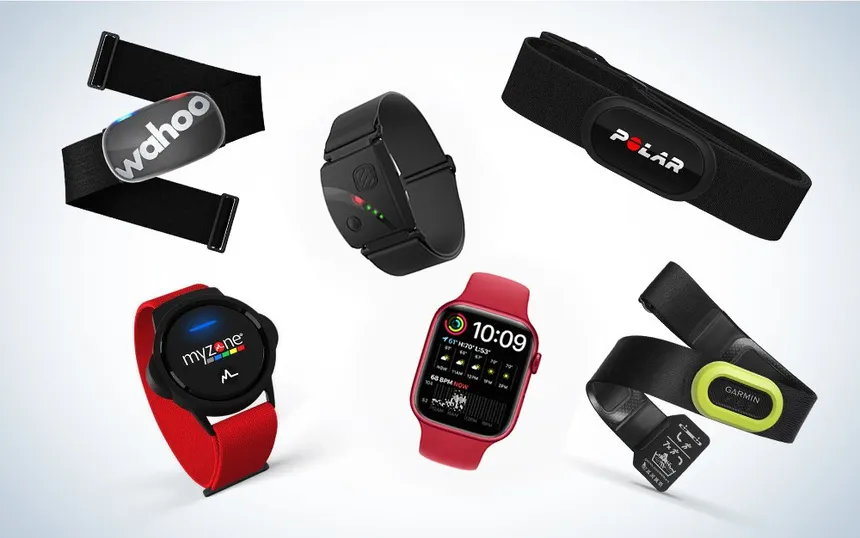
Start with where the sensor sits. A chest strap like the Polar H10, Garmin HRM-600 or Geoid HS500 picks up the heart's electrical signal close to the source, which is why independent reviewers keep recommending straps for intervals, hill repeats and anything with sudden changes in effort. Optical armbands such as the Scosche Rhythm+ 2.0 and iGPSPORT HR70 read blood flow through the skin instead; they're more comfortable for many people but generally respond more slowly when effort spikes. If you're choosing the best heart rate monitor for running intervals, that difference matters most.
Next, check connectivity. Every pick here offers Bluetooth and ANT+, covering phones, most GPS watches, bike computers and plenty of gym equipment. For a heart rate monitor for Apple Watch, you'll pair over Bluetooth: Polar's listing names Apple Watch, and Cardiosport's names Apple and Samsung watches. Anyone running a watch and an indoor bike simultaneously should favour the H10, which holds two Bluetooth connections.
Battery type is the quiet decider. Coin cells, as on the Polar and Geoid, last for months without a cable, though you'll eventually want a spare CR2025 or CR2032 in the kitchen drawer. Rechargeable straps like the Wahoo Trackr and CooSpo H9Z remove that chore but add another lead to the tangle on the hallway shelf, and armbands typically need charging more often than straps.
On budget, the entry-level end covers the CooSpo, the Geoid and the optical armbands from moofit, Fitcent and Cardiosport. The mid-range Wahoo and Polar handle most serious training, and the premium Garmin earns its place only if you want running dynamics or watch-free recording. Swimmers should check the listing: Polar lists 30 m water resistance, Scosche lists IP68, and Garmin says the HRM-600 stores heart rate during swims.
One firm boundary: a heart rate monitor provides training guidance, not a diagnosis, and none of these is a medical device. If you have a heart condition, a pacemaker or worrying symptoms during exercise, speak to your GP before building training around heart rate zones. My dad still checks his pulse against the kitchen clock after his morning walk, and for him that's plenty. For everyone else wanting proper zone data, just buy the Polar H10 and call it a day.
Key Specs Compared
| Product | Sensor Type | Connectivity | Battery | Our Score |
|---|---|---|---|---|
| Polar H10 M-XXL Heart Rate Sensor with Pro Chest Strap | ECG chest strap | Bluetooth + ANT+ (two Bluetooth connections) | CR2025 coin cell, ~400 hours | 9.8 |
| Garmin HRM-600 Premium Heart Rate Monitor Chest Strap, M-XL | ECG chest strap | Bluetooth + ANT+ | USB-C rechargeable, up to 2 months | 9.6 |
| Wahoo Trackr Rechargeable Heart Rate Monitor Chest Strap | chest strap | Bluetooth + ANT+ | rechargeable, 100+ hours | 9.5 |
| CooSpo H9Z Rechargeable Heart Rate Monitor Chest Strap | chest strap | Bluetooth 5.0 + ANT+ | Rechargeable Li-Ion, up to 50 hours | 9.3 |
| Scosche Rhythm+ 2.0 Optical Heart Rate Monitor Armband | optical armband | Bluetooth Smart + ANT+ | rechargeable, ~24 hours | 9.1 |
| moofit HW401 Optical Heart Rate Monitor Armband | optical armband | Bluetooth + ANT+ | rechargeable, 20 hours | 9.0 |
| Geoid HS500 Heart Rate Monitor Chest Strap | chest strap | Bluetooth 4.2 + ANT+ | CR2032 coin cell, 800 hours | 8.9 |
| iGPSPORT HR70 Optical Heart Rate Monitor Armband | optical armband | Bluetooth 5.0 + ANT+ | rechargeable, 65 hours | 8.8 |
| Fitcent Rechargeable Optical Heart Rate Monitor Armband | optical armband | Bluetooth + ANT+ | rechargeable, 60 hours | 8.7 |
| Cardiosport Optic Heart Rate Monitor Armband, Size S-L | optical armband | Bluetooth + ANT+ | rechargeable | 8.6 |
Frequently Asked Questions
What type of heart rate monitor is most accurate?
A chest strap that reads the heart's electrical signal is generally the most accurate type for exercise. Straps like the Polar H10 and Garmin HRM-600 cope with sprints and intervals better than optical sensors. Armbands come next and are usually steadier than wrist readings, while a watch's built-in sensor suits steady efforts more than sharp changes in pace.
Which heart rate monitor is best?
For most UK buyers, the Polar H10 is the best heart rate monitor. It pairs over Bluetooth, ANT+ and 5 kHz, runs on a long-life coin cell and was the most consistently recommended strap in my research. Garmin watch owners may prefer the HRM-600, and anyone who dislikes chest straps should look at the Scosche Rhythm+ 2.0 armband.
Polar or Garmin: which chest strap should I buy?
Buy the Polar H10 unless you own a recent Garmin watch and want its extra data. The H10 works with Polar, Garmin, Apple Watch and Suunto devices. The HRM-600 adds running dynamics, a rechargeable battery and watch-free recording, but much of that extra detail only shows up on compatible Garmin watches.
Can I use a chest strap heart rate monitor with an Apple Watch?
Yes, as long as the strap broadcasts over Bluetooth, which every pick here does. Polar lists Apple Watch support for the H10, and Cardiosport names Apple watches for its Optic armband. You pair the sensor in the watch's Bluetooth settings, and compatible workout apps can then use the strap's readings instead of the wrist sensor.
Can I wear a heart rate monitor while swimming?
Some you can, but check the listing first, because water ratings vary a lot. The Polar H10 is waterproof to 30 m and stores a session onboard, the Scosche Rhythm+ 2.0 is rated IP68, and Garmin says the HRM-600 stores heart rate during swims. Several budget armbands give no water rating at all, so keep those dry.
Should I use a heart rate monitor if I have a heart condition?
Ask your GP or cardiac team first, especially if you have a pacemaker or another implanted device. Every monitor here is a training tool for guiding effort, not a medical device, and none of them can diagnose anything. Your GP can tell you whether heart rate zone training suits you and which limits to keep to.
The Bottom Line
If you want one heart rate monitor that simply works with almost everything, buy the Polar H10 in the strap size that fits you. Garmin watch owners who want running dynamics should step up to the HRM-600, indoor riders tired of coin cells should get the Wahoo Trackr, and anyone who can't stand a chest strap should start with the Scosche Rhythm+ 2.0.
As an Amazon Associate I earn from qualifying purchases. See our affiliate disclosure for details. Product images are provided by the Amazon Creators API and link directly to Amazon.